Few sporting organizations carry the history, tradition, and cultural significance of Major League Baseball (MLB). For well over a century, MLB has entertained fans with unforgettable games, iconic athletes, and championship moments that have become part of sports history. Often referred to as America’s pastime, baseball continues to attract millions of supporters across generations while expanding its reach far beyond North America.
Today, Major League Baseball stands as one of the world’s most successful professional sports leagues, combining deep-rooted traditions with modern innovation. From historic ballparks and legendary rivalries to advanced analytics and global talent, MLB remains a cornerstone of the international sports landscape.
What Is Major League Baseball?
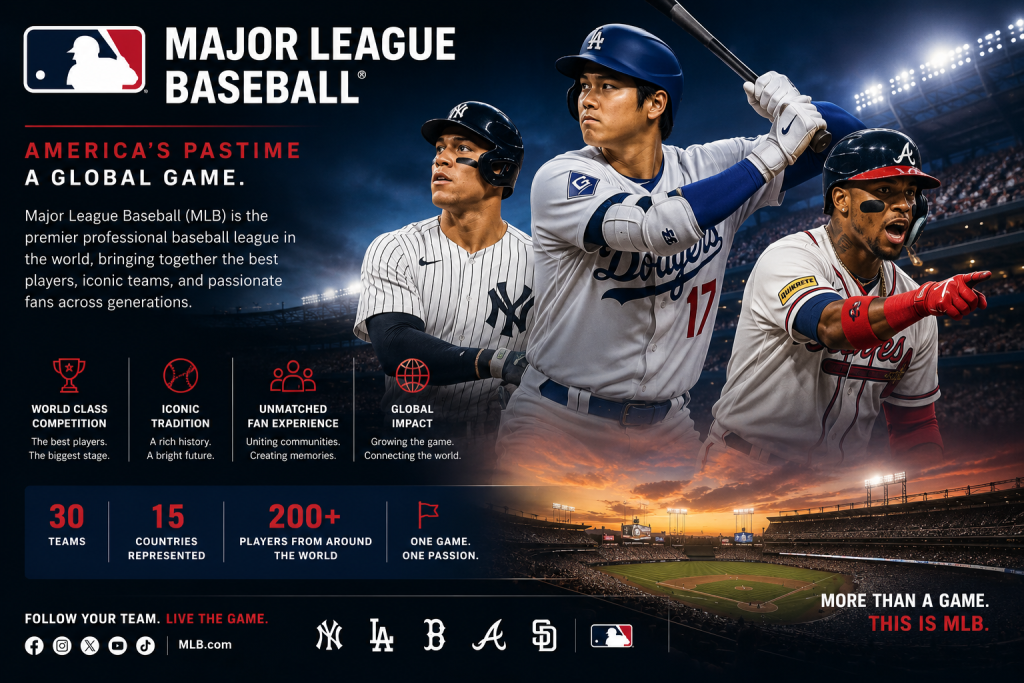
Major League Baseball represents the highest level of professional baseball competition in the United States and Canada. The league features 30 teams that compete annually for one of the most prestigious titles in sports—the World Series championship.
MLB is organized into two leagues:
- American League (AL)
- National League (NL)
Each league consists of three divisions, creating a highly competitive structure throughout the regular season and postseason.
A typical MLB season includes:
- Spring Training
- A 162-game regular season
- Postseason playoffs
- The World Series
With games broadcast across television, streaming platforms, and digital media, MLB reaches audiences around the globe and continues to grow its international fan base.
A Brief History of MLB
Professional baseball traces its origins to the late nineteenth century. The National League was established in 1876, becoming the oldest major professional sports league in the United States.
The American League was founded in 1901, and cooperation between the two organizations led to the first modern World Series in 1903. Since then, Major League Baseball has evolved into one of the most influential sports organizations in history.
Throughout its existence, MLB has witnessed countless defining moments, including Jackie Robinson breaking baseball’s color barrier in 1947, Babe Ruth revolutionizing offensive play with his home-run power, and numerous record-breaking performances by legendary athletes.
These historic achievements helped cement baseball’s place within American culture and sporting tradition.
League Structure and Teams
Major League Baseball consists of 30 franchises divided equally between the American League and National League.
Notable American League Teams
Some of the league’s most recognized American League organizations include:
- New York Yankees
- Boston Red Sox
- Houston Astros
- Toronto Blue Jays
Prominent National League Teams
Among the National League’s most popular franchises are:
- Los Angeles Dodgers
- Chicago Cubs
- Atlanta Braves
- Philadelphia Phillies
Teams compete throughout the season in pursuit of postseason qualification and the opportunity to capture the World Series title.
Why MLB Continues to Captivate Fans
Rich Tradition and Heritage
One of baseball’s greatest strengths is its history. Traditions such as Opening Day, the All-Star Game, the seventh-inning stretch, and the World Series remain cherished by fans year after year.
Generations of families have passed their love of baseball down through shared experiences at ballparks and in front of television screens.
Legendary Players
Major League Baseball has produced some of the most celebrated athletes in sports history. Modern stars continue to build upon that legacy while inspiring new fans worldwide.
Current standout players include:
- Shohei Ohtani
- Aaron Judge
- Mookie Betts
- Ronald Acuña Jr.
Their performances continue to elevate the popularity of the game.
A Unique Blend of Skill and Strategy
Baseball offers a distinctive combination of athletic ability and strategic depth. Decisions involving pitching changes, defensive positioning, lineup construction, and in-game tactics create an intellectual dimension that sets the sport apart.
This balance between physical performance and strategic planning remains one of MLB’s defining characteristics.
The Business Power of Major League Baseball
Beyond the field, MLB represents a major economic force within the sports industry.
The league generates billions of dollars annually through multiple revenue streams, including:
- Ticket sales
- National and regional broadcasting agreements
- Sponsorship partnerships
- Merchandise sales
- Streaming subscriptions
- Licensing opportunities
Franchises such as the New York Yankees and Los Angeles Dodgers rank among the world’s most valuable sports organizations.
Additionally, MLB teams contribute significantly to local economies through tourism, employment, stadium operations, and community investment initiatives.
Embracing Technology and Innovation
Major League Baseball has increasingly integrated technology to enhance both player performance and fan engagement.
Important innovations include:
- MLB.TV live streaming services
- Statcast performance tracking
- Advanced analytics systems
- Instant replay technology
- Mobile ticketing applications
- Virtual and interactive fan experiences
These technological advancements have transformed how games are analyzed, consumed, and experienced by fans worldwide.
MLB’s Expanding Global Reach
Although baseball has deep roots in North America, Major League Baseball continues to strengthen its international presence.
Many of today’s top players come from countries such as:
- Japan
- Dominican Republic
- Venezuela
- Cuba
- South Korea
International scouting, development programs, and overseas events have helped MLB attract new audiences while showcasing global talent.
The league’s efforts to grow baseball internationally remain a key component of its long-term strategy.
Challenges Facing Major League Baseball
Like all major sports organizations, MLB faces several ongoing challenges.
Evolving Consumer Preferences
Modern audiences increasingly favor shorter and faster-paced entertainment experiences. In response, MLB has introduced rule changes designed to improve game pace and increase excitement.
Competition Within the Sports Industry
Baseball competes with other major leagues, including professional football and basketball, for fan attention, media coverage, and sponsorship opportunities.
Labor and Financial Concerns
Collective bargaining negotiations, player compensation issues, and revenue distribution continue to shape relationships between team owners and players.
Successfully managing these issues remains essential for maintaining long-term stability.
The Future of Major League Baseball
The outlook for MLB remains optimistic as the league adapts to changing trends and embraces innovation.
Several growth opportunities are expected to influence the sport’s future, including:
- Expanded international competitions
- Increased youth participation initiatives
- Enhanced streaming experiences
- Artificial intelligence-driven analytics
- Continued stadium modernization
- Greater social media engagement
By blending innovation with tradition, Major League Baseball aims to remain relevant for future generations of fans.
Final Thoughts
Major League Baseball continues to occupy a special place in the global sports landscape. Its remarkable history, iconic athletes, passionate fan communities, and commitment to innovation have allowed the league to thrive for more than a century.
From historic ballparks and legendary rivalries to dramatic World Series moments, MLB offers experiences that resonate across cultures and generations. As the sport evolves to meet the demands of the modern era, Major League Baseball remains a lasting symbol of competition, tradition, and sporting excellence.